Inner Circle Session · October 2024
Session 3 - Boardroom Readiness for CISOs
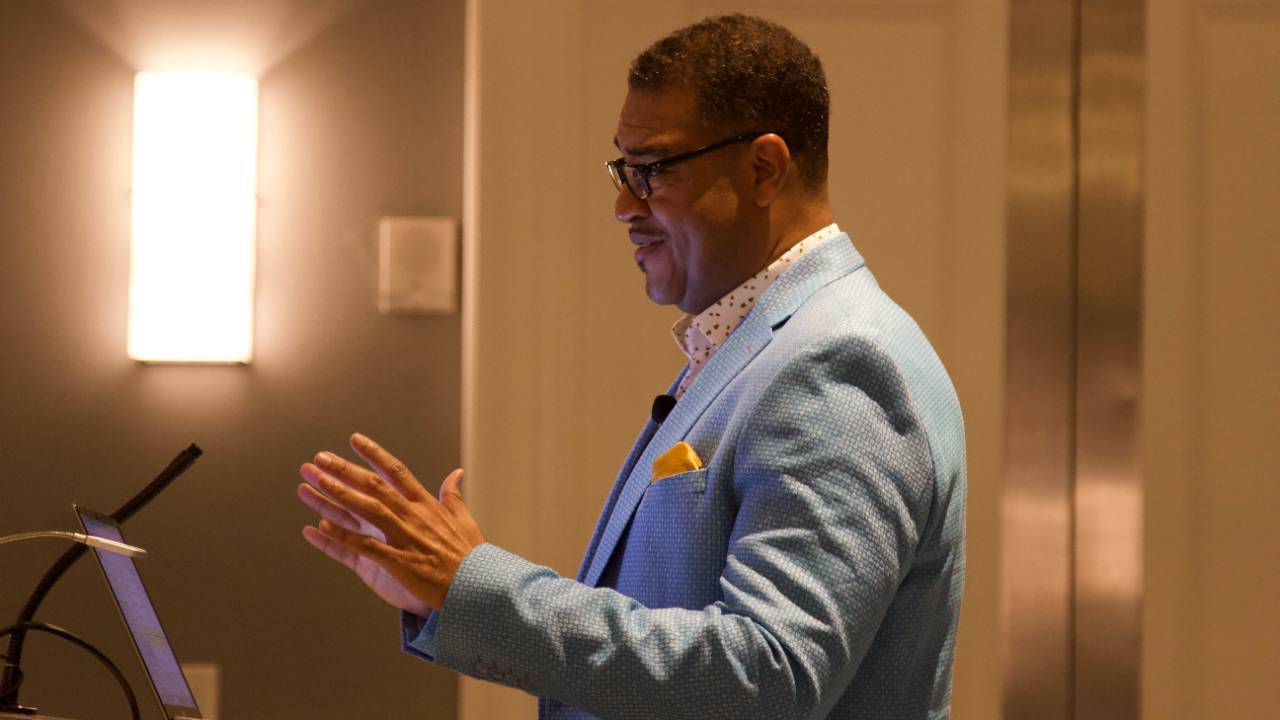
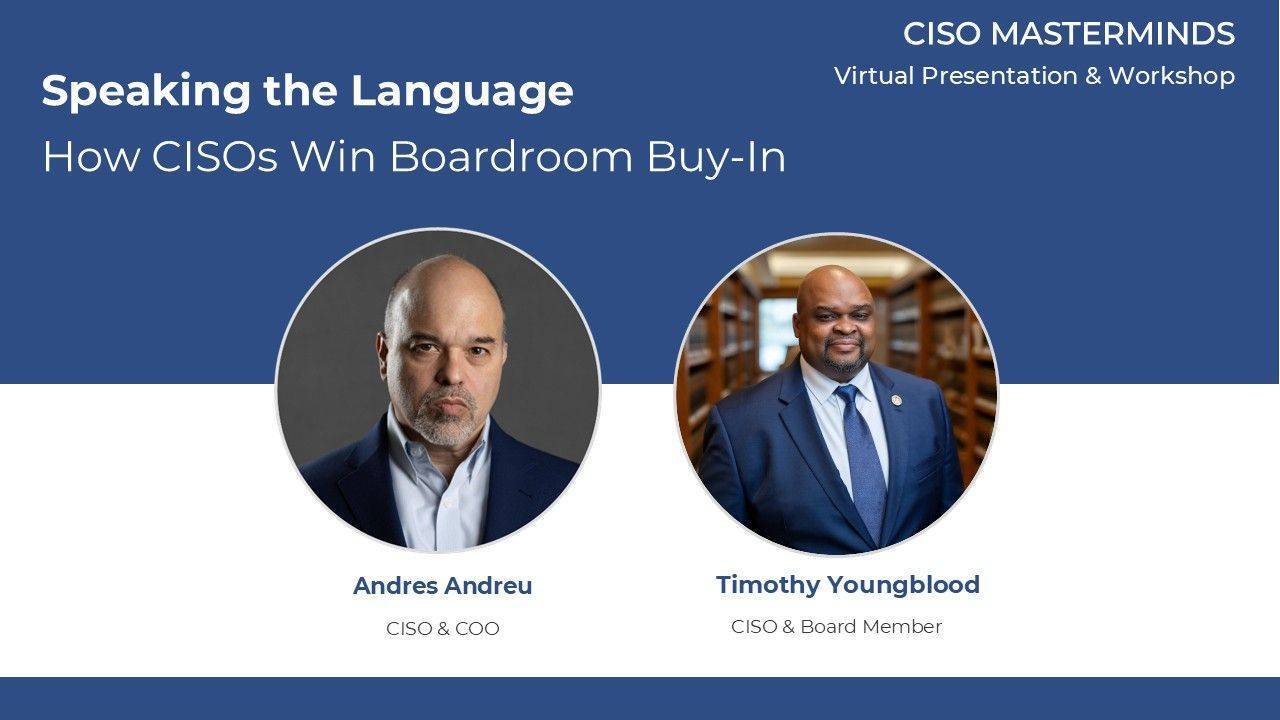
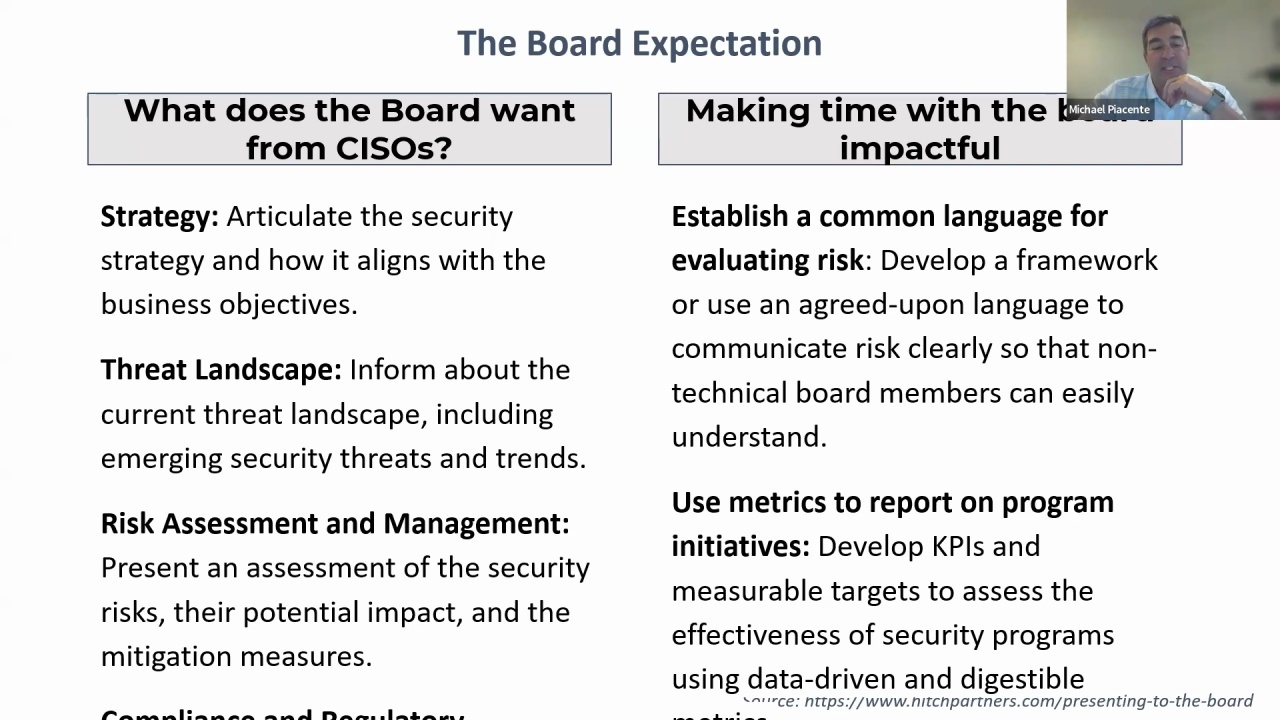
Key Takeaways from the CISO Masterminds Inner Circle Sessions & Spring Summit Simulation featuring: Jeffrey Vinson (Star Harbor CISO) Timothy Youngblood (Board Chair) Executive Summary Over two Inner Circle sessions and a live simulation at the CISO Masterminds Spring Summit, a group of senior cybersecurity leaders explored what it takes to communicate effectively in the boardroom. Through structured discussion and a mock board presentation — deliberately demonstrating both a poor and an exemplary approach — the group surfaced actionable guidance for CISOs preparing for their next board meeting. This white paper distills the collective wisdom from those sessions into practical takeaways that any CISO can apply immediately. Program Overview The CISO Masterminds Inner Circle held two preparatory roundtable sessions focused on cyber risk quantification and boardroom readiness, culminating in a live simulation at the Clearwater Beach summit. The simulation used a fictional scenario in which participants had accepted a CISO role at Star Harbor Marine, a public, 1,500-person company operating in three countries, and were now two months into the role, presenting a cybersecurity State of the Union to the board. The simulation ran in two parts. In Take 1, the presenter modeled common mistakes CISOs make. In Take 2, the same presenter demonstrated a refined, board-aligned approach. Audience debrief and facilitated discussion followed both takes, generating rich peer feedback. Take 1: Common Boardroom Pitfalls The first presentation illustrated what many CISOs inadvertently do when they walk into a boardroom unprepared. The audience recognized each misstep immediately — because many had lived them. Leading with Doom and Gloom The presenter opened with a litany of problems: a SOC with one analyst, thousands of unpatched vulnerabilities, outdated antivirus, undertrained staff, and a request for $15–25 million in new investment — all delivered in the first few minutes. While the problems were real, the framing created alarm without a roadmap, leaving board members anxious rather than confident. Overloading Technical Jargon Terms like EDR, SOAR, SIEM, and endpoint were used without context, causing board members to lose the thread. One veteran CISO recalled presenting Antivirus endpoint protection results to the board, only to be asked mid-presentation, "What is an endpoint?" The lesson: assume nothing about a board's technical vocabulary. Throwing Predecessors and Auditors Under the Bus The presenter implied the prior CISO had done a disservice and that auditors had missed significant issues. Audience members immediately flagged this: undercutting predecessors and external partners destroys trust and political capital needed for the CISO's own program to succeed. No Self-Introduction It was this CISO's first board appearance. They never introduced themselves, shared their background, or established why the board should trust their assessment. First impressions matter; human connection precedes credibility. Misaligned Budget Requests The presenter directed budget requests to the board — but as one board member noted, boards typically do not approve operating budgets. That conversation belongs with the CFO and CEO before the board meeting. Saying the B-Word — Without Being Ready When asked point-blank whether the company was currently breached, the presenter hedged with "I believe so." This created an immediate crisis of confidence. As one participant put it: "You better be able to back that up." If a CISO suspects a breach, that communication must be handled proactively — through the CEO and board chair — not surfaced for the first time in an open meeting. Take 2: What Great Looks Like The same presenter returned with a completely restructured approach. The security posture had not changed — the company's real vulnerabilities were identical. But the framing, confidence, and strategic alignment transformed the room's reaction entirely. Lead with the Business, Not the Technology The presenter opened by mapping cybersecurity milestones directly to the board's own strategic objectives: Fortune 500 and government growth, European expansion, AI governance, and operational efficiency. Each security initiative was presented as an enabler of revenue and growth — not a cost center or a list of defensive measures. Be Brief, Be Heard, Be Gone Acknowledging that time is always compressed, the presenter stated upfront: "I know you have a busy day. I'll be brief, be heard, and be gone." Board members responded positively to the respect for their time. The most experienced voices in the room recommended planning for half the allotted time — preparing 7 slides but being ready to deliver the top 3 in 5 minutes. Frame Security as a Competitive Advantage Rather than measuring success by the absence of breaches, the presenter showed how a mature security program accelerates deal conversion, reduces compliance drag in new markets, and enables the company to move at speed. Security was positioned as something that helps the company win — not just survive. Handle the Hard Questions with Confidence When asked about nation-state threats from Iran, the presenter responded calmly, referencing geopolitical risk context and explaining the layered defense posture in plain language. When asked about competitor benchmarks, the presenter gave a direct, confident answer tied to specific program activities. Confidence — posture, eye contact, command of the room — was repeatedly cited as what made the second presentation land. Defer What Isn't Ready — But Commit to a Date When asked about board KPIs, the presenter acknowledged they were being developed and committed to presenting them at the next session following internal alignment. This showed rigor without overpromising. Boards do not expect perfection from a two-month CISO; they expect a plan. Top 10 Takeaways for CISOs Before You Walk Into the Room • Find your board advocate — a member who can brief you on politics, preferences, and what topics to avoid. Meet with them at least once per quarter. • Connect with your CEO and CIO before the meeting. No surprises in the boardroom — align your messaging, your numbers, and your tone in advance. • If you have bad news, socialize it with the CEO, CIO, and board chair before the meeting — not during it. • Review previous board meeting minutes. Understand what your predecessor presented, how the board receives information, and what cadence they expect. • Know whether your board prefers slides, narrative, or a clean packet. Not all boards are the same. During the Presentation • Align every security initiative to a business objective. Show how cyber enables the company to grow, expand, and compete — not just stay safe. • Speak the language of the boardroom: revenue, risk, competitive position, regulatory exposure. Avoid technical jargon, or define it immediately when necessary. • Prepare for your 20-minute slot to become 5 minutes. Know your top 3 points cold. Have an elevator pitch ready at all times. • Introduce yourself on a first appearance. Establish your background, your philosophy, and why they can trust you before you share any assessments. • Project confidence. Body language, eye contact, and command of the room communicate competence before a single data point lands. On Metrics: Less Is More A recurring theme across both sessions was the danger of over-indexing on metrics. Several experienced CISOs noted that boards often receive data with a glazed-over reaction — too much information without narrative context fails to communicate anything. The group's consensus: bring 3 to 6 carefully selected KPIs that directly connect security performance to business outcomes. The simulation's slide deck offered a strong model — suggested board KPIs included deal security review time, strategic deals with security support, privileged users under MFA, critical vulnerabilities remediated to SLA, AI use cases under formal governance, and security ops savings from automation. Each is a business metric as much as a security metric. The most effective approach is to tell a story first, then back it with one or two figures that make the story tangible. Present risk as a range, not a point estimate. Be prepared to defend your numbers, but do not lead with them. Connecting Risk Quantification to Board Communication The Inner Circle's earlier session on cyber risk quantification directly informed the boardroom simulation. The FAIR methodology was discussed as a framework for translating technical risk into financial exposure — annualized loss exposure, loss exceedance curves, and ROI calculations that resonate with financially-oriented board members. The key insight: boards do not want a number. They want to understand risk appetite. A CISO's job is to surface the board's own risk tolerance — to help them define what level of exposure is acceptable — and then manage the program to that standard. This reframes the conversation from "give me money to reduce risk" to "here is what your accepted level of risk looks like, and here is my plan to manage it." Know Your Context: Not All Boards Are Equal Multiple participants emphasized that the simulation represented an idealized scenario. Real boardrooms vary widely in culture, expectations, and format. Some boards prefer no slides at all — a packet reviewed in advance, then a direct conversation. Others want a tightly formatted presentation. Some CISOs present independently; others have their messaging filtered through a CIO. One CISO shared a cautionary story about speaking to a reporter at Black Hat — one week into a new job — and nearly being fired for mentioning company vulnerabilities in general terms. The lesson: communication discipline applies outside the boardroom too. Know who you are speaking to, in every context. Whether your board session is an executive session with full transparency, or a formal open meeting where every word could be reported externally, adapt your communication style accordingly — and prepare for both. Closing Thought One board member in the simulation closed the second take with a simple observation: "The first presentation left me scared and frustrated. This one made me feel good." That emotional response — not the data, not the frameworks — is the real measure of board communication success. CISOs who prepare thoughtfully, align to business strategy, communicate with confidence, and earn the trust of at least one board advocate will find the boardroom becomes a place where they can do their best work — not a high-stakes performance review. About CISO Masterminds Inner Circle CISO Masterminds is a peer learning community for senior cybersecurity leaders. The Inner Circle brings together experienced CISOs and security executives for facilitated sessions on leadership, strategy, and boardroom effectiveness. This white paper summarizes insights from Session 3 of the Inner Circle series and the Boardroom Readiness simulation held at the Spring 2026 Summit in Clearwater Beach, Florida.
.png?width=250&height=43&name=CISO%20Masterminds%20Logo%20(1).png "CISO Masterminds Logo (1)")